Under the guidance of a mysterious man called "The Professor", a group of robbers, Tokyo, Rio, Berlin, Nairobi, Denver, Moscow, Oslo, and Helsinki, invade the Royal Mint of Spain and take hold of 67 hostages as part of their plan to print, and escape with, €2.4 billion. Raquel Murillo, a police investigator is put in charge of the case, unaware that the mastermind is closer than she could ever imagine.
Un enigmático hombre que se presenta como “el profesor” forma un equipo con 8 ladrones con el propósito de dar el mayor golpe de la historia con un atraco a la Fábrica de moneda y timbre. El equipo se instala en la fábrica secuestrando 67 rehenes y comienza a imprimir dinero. Raquel Murillo, la inspectora puesta a cargo del caso, no sabe que el cerebro detrás del atraco está más cerca de lo que se podrá imaginar.
One of Constantine ’s central themes is the blurred line between good and evil, angels and demons. Western Catholic imagery—holy water, crucifixes, the Spear of Destiny—is foreign to many Vietnamese viewers, who come from a mixed background of Buddhism, Taoism, and ancestral worship. The thuyết minh script often subtly re-frames these concepts. For example, Gabriel’s betrayal and the film’s cynical take on divine grace are delivered in a tonally neutral Vietnamese voice-over that emphasizes bureaucratic corruption over theological blasphemy. This allows the audience to grasp the power dynamics (Heaven as a stern, distant authority; Hell as a chaotic underworld) without getting lost in Judeo-Christian specifics. The thuyết minh acts as a cultural translator, turning a niche Western theological horror film into a universal parable about balance—a concept far more familiar to the Vietnamese audience.
In the landscape of early 2000s cinema, Francis Lawrence’s Constantine stands as a cult classic—a neo-noir horror-action hybrid that reimagines DC Comics’ Hellblazer character through a gritty, atmospheric lens. For Vietnamese audiences, the experience of this film is often inseparable from its thuyết minh (voice-over narration) version. While purists may argue for subtitled originals, the dubbed Constantine offers a unique case study in how localization can enhance, rather than diminish, a film’s core themes of existential dread, weary heroism, and spiritual ambiguity. The thuyết minh format does not simply translate Keanu Reeves’ performance; it reinterprets John Constantine’s weary, chain-smoking nihilism for a cultural context that deeply respects tonal storytelling over literal accuracy, thereby creating a version that is more accessible, emotionally resonant, and rhythmically compelling. phim constantine thuyet minh
Action films dubbed in thuyết minh often face criticism for flattening the soundscape—the narrator’s voice competes with explosions and gunfire. Surprisingly, Constantine benefits from this. The film is unusually quiet for an action movie; its set pieces (the shotgun exorcism, the mirror realm fight) are punctuated by silence and low growls. The Vietnamese voice-over narrator, speaking with a calm, measured tone even during chaos, reinforces the film’s stoic philosophy. While English-speaking viewers hear Reeves grunt and shout, the Vietnamese thuyết minh maintains a clinical, almost documentary-like detachment. This creates a strange but effective dissonance: as Constantine battles demons on screen, the calm, authoritative Vietnamese voice continues its narrative, suggesting that this horror is mundane, routine—just another day’s work. This aligns perfectly with the film’s core message that the supernatural is merely a grimy extension of the real world. One of Constantine ’s central themes is the
The thuyết minh version of Constantine is not a degradation of the original but a thoughtful re-imagining. By prioritizing tonal consistency, cultural accessibility, and a rhythmic calmness amidst the chaos, the Vietnamese dubbing transforms a flawed Hollywood blockbuster into a focused, philosophical character study. It proves that localization, when done with care, can uncover new dimensions in a film. For the Vietnamese audience, the voice that narrates Constantine’s journey becomes an additional character—a storyteller who guides them through a foreign mythology of damnation and grace. In the end, both versions ask the same question: “Would you sacrifice yourself for a world that despises you?” But in the thuyết minh version, that question resonates with the quiet, collective gravity of a culture that values endurance over spectacle. And perhaps, that is the truest form of hellblazing. For example, Gabriel’s betrayal and the film’s cynical
Binge watching the latest season of a great TV show is everyone's guilty pleasure. But we just can’t seem to find 1 hour per week to dedicate to our Spanish studies. Now imagine a world where you could learn Spanish just by watching great Spanish TV shows. Well that’s exactly “The Binge Learning Method by Lingopie.”
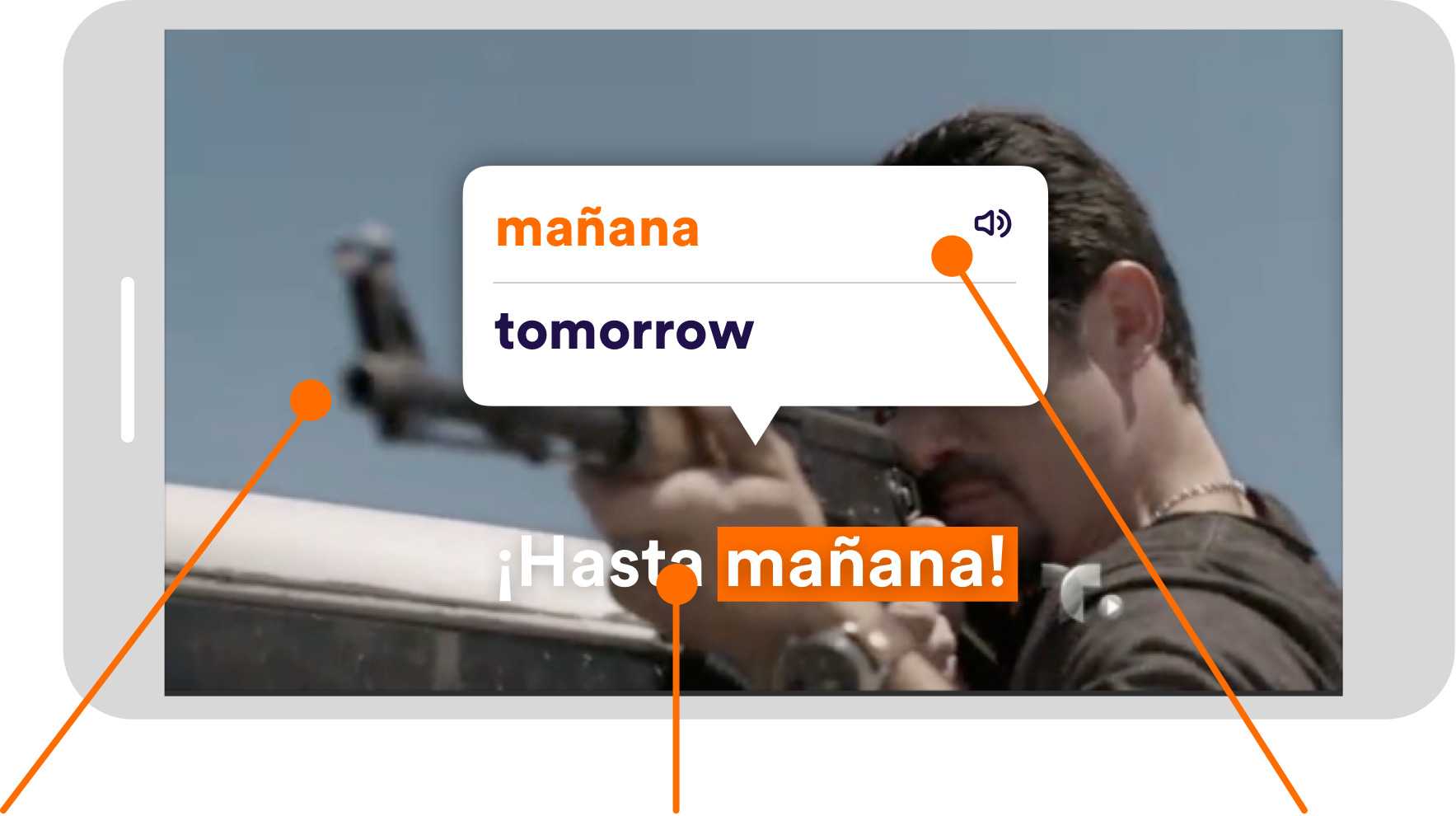
Choose a great Spanish TV show from our extensive catalog of TV Shows. Each Spanish TV show is displayed with Spanish subtitles. Start watching and when you don’t understand something, just click on that word or phrase and get an instant translation. Lingopie saves all your words and phrases so you can review them afterwards with built-in SRS language learning tools. As you binge watch from episode to episode, you’ll quickly notice that you understand more & more in record time. The more you watch, the more you learn. That’s the “Binge Learning Method.”
LingoPie makes learning addictive! Using interactive closed captions and
great foriegn contnent, learning a new language is as fun as watching TV.
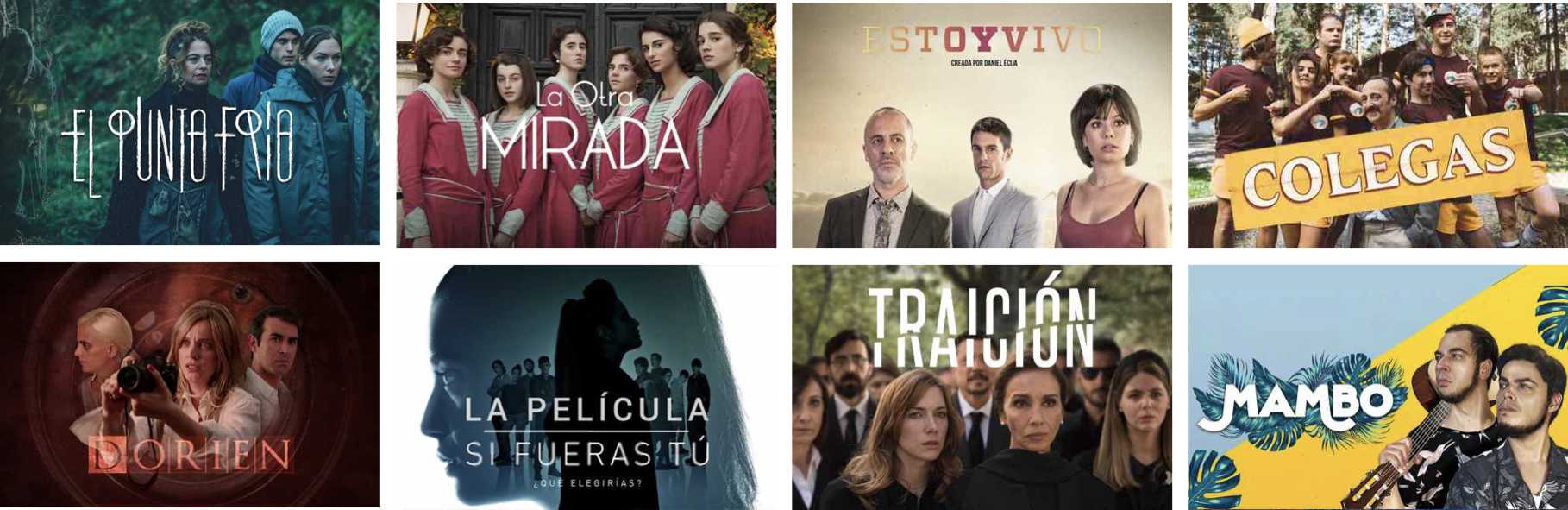

and dozens of other great shows!


Enjoy Great Shows
Highly acclaimed
Spanish TV shows

Click & Translate
Interactive, clickable,
same language captions

Learn From Context
Contextual translations,
grammar and sample sentence
Highly acclaimed Spanish TV shows.
Interactive, clickable, same
language captions
Contextual translations, grammar and
sample sentence

Jennifer P.

Beatrice R.

Myra M.

Hiran A.

Jennifer P.
Jan 2nd, 2019
Beatrice R.
Jan 2nd, 2019
Myra M.
Nov 6th, 2018
Hiran A.
Feb 16th, 2019

