Population Density in terms of Geography in I...
The most common sort among the calculations of population density is as defined by the number of persons per square kilometre. Calculations of population density depict...
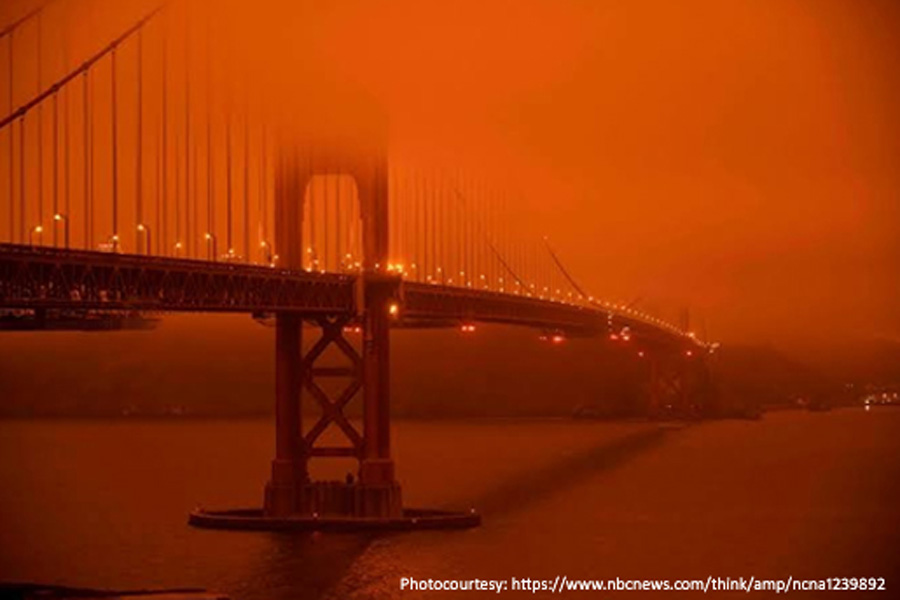
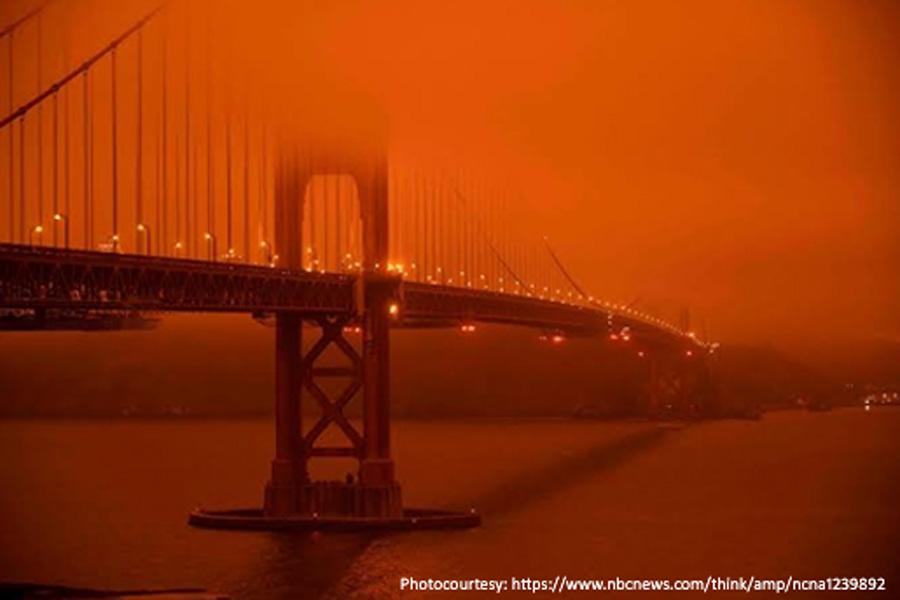
US Climate-No Cause for A...
‘I don’t believe it’, was US President Donald Trump’ response to the ‘the National Climate Assessment’, in which clim...
Wind Types | Why They are...
Ascertaining wind types is important to understand disas...
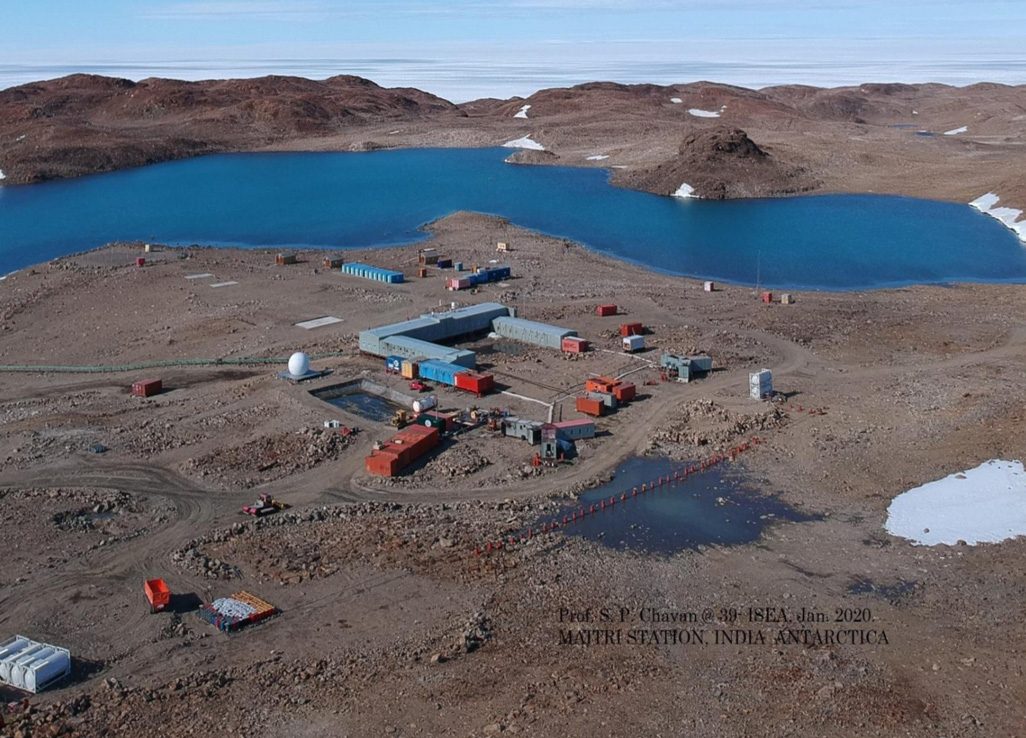
India is set to embark on a new chapter in its Polar exploration journey with the construction of Maitri II. The Indian government plans to establish a new research station near the existing Maitri base, located in the Schirmacher Oasis region of East Antarctica, which was commissioned in 1989. The completion of the research station would be India's fourth r...
The Deep Ocean Mission (DOM), approved by the Government of India in 2021 under the Ministry of Earth Sciences (MoES), represents a strategic step in realizing Sustainable Development Goal 14 (SDG 14: Life Below Water)1 and advancing the national vision of Viksit Bharat 2047. In this episode of GnY Live, we participate in a discussion with Dr. M. Ravichandra...
China recently announced restrictions on the export of seven rare earth elements (REEs), soon after US President Donald Trump decided to impose tariffs. As the world's dominant supplier—responsible for over 85 to 90 per cent of rare earth processing (Jayadevan, 2025)—this decision has raised alarms across the tech, defence, and energy sectors worldwide. Bu...

Ultimately, SimCity 5: Cities of Tomorrow succeeds not as a simulator of the future, but as a mirror of the present. It was released in a decade marked by the rise of surveillance capitalism, the panic over automation, and the visible splintering of urban spaces into gated communities and informal settlements. The expansion’s notorious bugs—such as the "fire truck pathfinding loop" or the "infinite recycling truck" glitch—are often cited as evidence of its failure. Yet, these failures are thematically appropriate. The game’s central argument is that cities are not elegant machines; they are chaotic, leaky systems prone to unexpected collapse. The player’s job is not to build the perfect city of tomorrow, but to manage the messy, compromised city of today. In this, Cities of Tomorrow remains a uniquely honest artifact: a flawed, ambitious, and deeply thoughtful game about the impossible dream of getting the future right.
At its core, Cities of Tomorrow introduces two divergent technological philosophies: the Academy and the OmegaCo corporation. This binary is the expansion’s most potent rhetorical device. The Academy represents a green, decentralized, and egalitarian future—think open-source 3D printing and clean fusion power. OmegaCo, conversely, offers a hyper-efficient, authoritarian, and monopolistic future built on “ControlNet,” a pervasive digital surveillance and logistics network. The genius of the expansion is that neither path is presented as unambiguously good. An OmegaCo city is astonishingly profitable and orderly, but its citizens are reduced to compliant consumers stripped of political will. An Academy city is clean and innovative, yet its reliance on high-tech "Vehicles of Tomorrow" often fails to solve the fundamental problem of traffic, and its population remains stubbornly wealthy, refusing to perform menial industrial labor. The player is never allowed to feel heroic; every choice to solve a problem—pollution, crime, poverty—introduces a new, ethically murky consequence.
The most visible symbol of this tension is the MegaTower. These vertical neighborhoods are ostensibly the solution to the game’s most famous flaw: the tiny, hard-capped map sizes. By building up, players can pack a city’s worth of population into a single structure. However, the MegaTower is a masterclass in systemic irony. A tower can be a self-contained paradise—with penthouses, rooftop gardens, and high-tech elevators—or a vertical slum, where poor Sims live in cramped "Level 1" apartments, working low-tier jobs in the tower's basement. Crucially, the game forces interdependence. The wealthy penthouses require the service of the poor workers, who cannot afford to live elsewhere. The player must physically manage the flow of workers and shoppers between levels, a vertical simulacra of the real-world inequality that plagues global megacities like Mumbai or São Paulo. The game’s message is clear: technology does not erase class; it simply stacks it into higher, more precarious piles.
The city-building genre has long been a sanctuary for control freaks and systems-thinkers. From the meticulous zoning of SimCity 4 to the dystopian logistics of Frostpunk , these games offer a godlike perspective on the chaos of urban life. Yet, with the release of SimCity 5 (2013) and its expansion, Cities of Tomorrow , Maxis attempted something audacious: not just simulating a city, but simulating the future of a city. While the expansion is often remembered for its jetpacks, mag-lev trains, and towering MegaTowers, a closer examination reveals that Cities of Tomorrow is less a prediction of technological marvels and more a sharp, playable essay on the socio-economic and environmental fault lines of 21st-century urbanism. The game does not offer a utopian vision; instead, it forces players to confront the inherent contradictions of smart cities, resource scarcity, and the digital divide.
Located in the Dehradun district, the Asan Conservation Reserve is the 38th Ramsar site in India and first in the state of Uttarakhand. It is a human-made wetland, which has resulted due to the Asan B..
A new paper by British climate writer, Paul Homewood says that average temperature rise in the USA is not alarming. Based on the data received from the NOAA, it claims that there has been little or no...
The risk of climate change is universal but the poor are more vulnerable with worsening food security and exacerbating hunger in developing countries. Climate change is also likely to affect species distribution and increase the threat of extinction and loss of biodiversity. ..
1° Hotter = 1000 Dead: Heat Waves as India’s Growi...
Heatwaves are no longer episodic extremes but are increasingly becoming a structural...
Sale! Sale! Sale!: Private Education
As India stands at a critical juncture in education reform, questions surrounding pri...
Vanishing Grants: The Fate of Higher Education in...
The foundational principle upon which our education system rests is fundamentally bas...
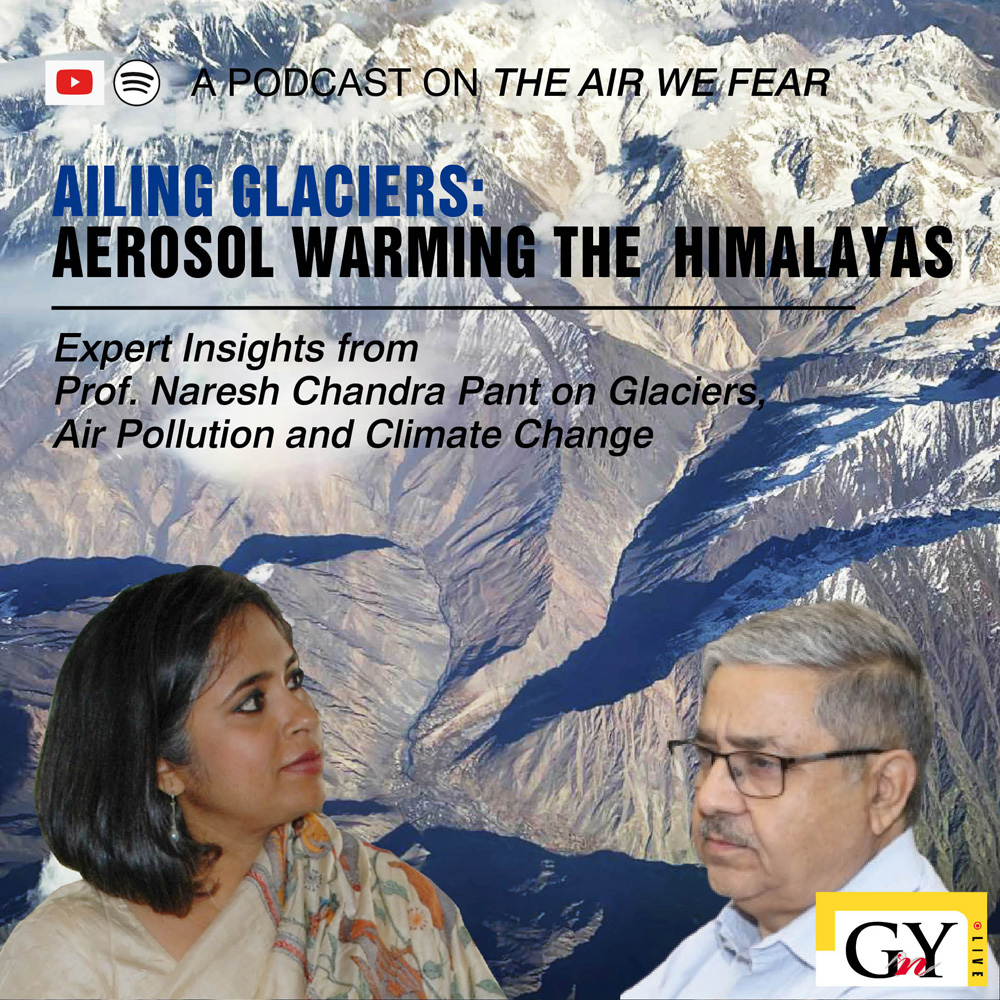
Ailing Glaciers: Aerosol Warming the Himalayas-Ins...
The Himalayan glaciers face significant climate change and air pollution threats. In...
Ultimately, SimCity 5: Cities of Tomorrow succeeds not as a simulator of the future, but as a mirror of the present. It was released in a decade marked by the rise of surveillance capitalism, the panic over automation, and the visible splintering of urban spaces into gated communities and informal settlements. The expansion’s notorious bugs—such as the "fire truck pathfinding loop" or the "infinite recycling truck" glitch—are often cited as evidence of its failure. Yet, these failures are thematically appropriate. The game’s central argument is that cities are not elegant machines; they are chaotic, leaky systems prone to unexpected collapse. The player’s job is not to build the perfect city of tomorrow, but to manage the messy, compromised city of today. In this, Cities of Tomorrow remains a uniquely honest artifact: a flawed, ambitious, and deeply thoughtful game about the impossible dream of getting the future right.
At its core, Cities of Tomorrow introduces two divergent technological philosophies: the Academy and the OmegaCo corporation. This binary is the expansion’s most potent rhetorical device. The Academy represents a green, decentralized, and egalitarian future—think open-source 3D printing and clean fusion power. OmegaCo, conversely, offers a hyper-efficient, authoritarian, and monopolistic future built on “ControlNet,” a pervasive digital surveillance and logistics network. The genius of the expansion is that neither path is presented as unambiguously good. An OmegaCo city is astonishingly profitable and orderly, but its citizens are reduced to compliant consumers stripped of political will. An Academy city is clean and innovative, yet its reliance on high-tech "Vehicles of Tomorrow" often fails to solve the fundamental problem of traffic, and its population remains stubbornly wealthy, refusing to perform menial industrial labor. The player is never allowed to feel heroic; every choice to solve a problem—pollution, crime, poverty—introduces a new, ethically murky consequence. Download Simcity 5 Cities Of Tomorrow
The most visible symbol of this tension is the MegaTower. These vertical neighborhoods are ostensibly the solution to the game’s most famous flaw: the tiny, hard-capped map sizes. By building up, players can pack a city’s worth of population into a single structure. However, the MegaTower is a masterclass in systemic irony. A tower can be a self-contained paradise—with penthouses, rooftop gardens, and high-tech elevators—or a vertical slum, where poor Sims live in cramped "Level 1" apartments, working low-tier jobs in the tower's basement. Crucially, the game forces interdependence. The wealthy penthouses require the service of the poor workers, who cannot afford to live elsewhere. The player must physically manage the flow of workers and shoppers between levels, a vertical simulacra of the real-world inequality that plagues global megacities like Mumbai or São Paulo. The game’s message is clear: technology does not erase class; it simply stacks it into higher, more precarious piles. Ultimately, SimCity 5: Cities of Tomorrow succeeds not
The city-building genre has long been a sanctuary for control freaks and systems-thinkers. From the meticulous zoning of SimCity 4 to the dystopian logistics of Frostpunk , these games offer a godlike perspective on the chaos of urban life. Yet, with the release of SimCity 5 (2013) and its expansion, Cities of Tomorrow , Maxis attempted something audacious: not just simulating a city, but simulating the future of a city. While the expansion is often remembered for its jetpacks, mag-lev trains, and towering MegaTowers, a closer examination reveals that Cities of Tomorrow is less a prediction of technological marvels and more a sharp, playable essay on the socio-economic and environmental fault lines of 21st-century urbanism. The game does not offer a utopian vision; instead, it forces players to confront the inherent contradictions of smart cities, resource scarcity, and the digital divide. Yet, these failures are thematically appropriate