
In the rapid evolution of mobile operating systems, few artifacts represent a more distinct transitional period than the Google Play Store APK designed for Android 4.2.2 (Jelly Bean MR1). Released in late 2012 and codenamed “Jelly Bean,” Android 4.2.2 was a refinement of Google’s push to unify tablets and phones. However, examining its dedicated Play Store APK today is not merely an exercise in nostalgia; it is a study in software archaeology, security vulnerability, and the shifting economics of the Google Play ecosystem. While technically executable on modern hardware, the Android 4.2.2 Play Store APK stands as a deprecated, dangerous, and fundamentally broken gateway to a dead digital marketplace.
The most critical aspect of this essay must address security. Using the Android 4.2.2 Play Store APK on any device connected to the internet is a severe risk. First, its SSL/TLS implementation only supports up to TLS 1.0, which has been deprecated since 2018 due to vulnerabilities like POODLE and BEAST. Second, the APK does not validate certificate pinning for Google’s servers, making it trivial for a man-in-the-middle (MITM) attack to replace downloaded APKs with malware. Third, because Android 4.2.2 itself no longer receives security patches, a compromised Play Store client can be used to escalate privileges via known exploits (e.g., CVE-2013-6282, the “Master Key” vulnerability). In essence, running this APK is equivalent to using a 1990s web browser on a modern banking site—it is functionally suicidal. android 4.2.2 google play store apk
The Android 4.2.2 Play Store APK is not a standalone executable. It is tightly coupled with two other components: and Google Play Services (which, in 4.2.2, was a minimal, version 1.x library). The APK relies on deprecated APIs such as AccountManager for Google account tokens (without OAuth2 scopes) and PackageManager ’s old signature verification methods. A developer analyzing its bytecode would find references to com.android.vending intents that were phased out after API level 17. Moreover, the APK assumes the presence of dalvik.vm instead of ART (Android Runtime), which became default in Android 5.0. Attempting to install this APK on a newer OS via sideloading often results in immediate crashes because the underlying Binder IPC contracts have changed. In the rapid evolution of mobile operating systems,

About us

Products

News

Contact us
Head office:
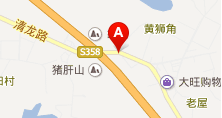
Address: MHK Industrial Park, No.5 Xinfeng Street, ChangLong Village,
HuangJiang Town, DongGuan City, 523000, GuangDong, P.R.China
Tel: 00-86-769-3894-2241
Fax: 00-86-769-3901-1088
E-mail:
ost-sales@mhkdvr.com
kat-sales@mhkdvr.com
DVR:sza-sales@mhkdvr.com
Russia email to szd-sales@mhkdvr.com
 Copyright All rights reserved ICP: 0903729 * No. Website: combined excellent network
© 2026 Venture Grid. All rights reserved.
 简体中文
简体中文 English